Best Home EV Charger UK 2026: Compared and Ranked
Seven UK home EV chargers compared on tariff support, solar diversion, warranty and price — with a decision matrix keyed to your charger choice.
The best home EV charger in the UK in 2026 is the one that matches three things about your household: the smart tariff you're on (or about to move to), whether you have solar PV, and whether you have a single-phase or three-phase electrical supply. Headline kilowatt ratings barely matter — almost every consumer charger sold in the UK is single-phase 7.4kW because that's the limit of a domestic 32A supply. What separates the seven chargers worth shortlisting is how they integrate with smart tariffs, how they handle solar surplus, how reliable the install is, and whether you'll still own a working unit in five years.
This guide ranks the seven home chargers most commonly installed in the UK against those criteria, then ends with a decision matrix so you can match the right unit to your priority. Pricing is correct as of May 2026; the OZEV chargepoint grant rose from £350 to £500 per socket on 1 April 2026 (Department for Transport, 2026) and is referenced throughout where relevant.
How this guide ranks chargers
What we weight, what we ignore
This is an **editorial guide based on manufacturer specifications, supplier compatibility lists, and aggregated reviewer testing** — not first-hand product testing. Every claim about charging behaviour, warranty terms, and tariff integration is sourced to the manufacturer or to the energy supplier the charger talks to.
Four criteria carry most of the weight in our ranking:
- Smart-tariff integration depth. All seven chargers nominally work with time-based smart tariffs, but only a handful run a full Octopus Intelligent Go API integration where the supplier (not the user's app) schedules charging. That's a bigger differentiator than power output once you commit to a tariff like Intelligent Octopus Go.
- Solar diversion behaviour. If you have rooftop PV, the charger needs to see your meter export and divert it. CT-clamp support, threshold tuning, and how the charger blends grid + solar in a hybrid mode separate the serious solar chargers from the rest.
- Install practicality. Open-PEN protection (UK regulatory requirement since 2018) integrated into the unit means no separate earth rod and a faster, cheaper install. Load balancing matters if a second EV is on the horizon.
- Long-run ownership cost. A 7-year warranty is worth more than a £100 unit-price saving over a typical 8–10-year ownership window. Manufacturer financial stability matters here — chargers from companies that go under can become impossible to support.
Headline kilowatt ratings barely move the ranking. With one exception (the Wallbox Pulsar Plus on three-phase) every consumer charger in this guide tops out at 7.4kW because that is what a UK domestic single-phase 32A circuit allows. Anything labelled "[22kW](/blog/22kw-vs-7kw-home-charger/)" requires three-phase electricity, which only ~10% of UK homes have.
Ohme Home Pro — best for Intelligent Octopus Go
Deepest smart-tariff integration of any UK charger
The Ohme Home Pro is the strongest pick if you are on, or planning to move to, Intelligent Octopus Go. Octopus's tariff scheduler talks directly to Ohme via API — and uniquely among compatible chargers, Ohme can extend the cheap window dynamically when Octopus grants additional cheap periods outside the standard 23:30–05:30 block (Best Chargers, 2026). No other charger in this guide has that behaviour built in.
The hardware is competent rather than exceptional. It's a 7.4kW single-phase [tethered](/blog/tethered-vs-untethered-ev-charger/) unit (5m or 8m Type 2 cable), with a small LCD that displays the live charge schedule and CO₂ figures. New 2026 units include a CT clamp for solar diversion (a meaningful upgrade — early Home Pros lacked any solar mode at all). 4G connectivity comes as standard, so charging schedules survive a Wi-Fi outage. Built-in earthing means no separate earth rod, simplifying install.
What to know before buying: Ohme keeps its own scheduling app — the Octopus integration sits alongside it, not inside the Octopus app. That trips up users when troubleshooting, because two apps now control one charger. The 3-year warranty is shorter than Andersen's 7 and below Hypervolt's extendable-to-5. Pricing starts from around £539 for the unit alone, or roughly £936 fully installed via Smart Home Charge — slightly above the IOG-compatible mid-range, justifiable mainly if you're committing to Octopus.
Ohme Home Pro — key specs
| Specification | Value |
|---|---|
| Power output | 7.4kW (single-phase 32A) |
| Cable | Tethered 5m or 8m Type 2 |
| Smart-tariff integration | Native Intelligent Octopus Go (deepest of any charger; dynamic cheap-window extension) |
| Solar mode | Yes (CT clamp on 2026 units) |
| Connectivity | 4G + Wi-Fi |
| Warranty | 3 years |
| Typical installed price (May 2026) | From ~£936 |
myenergi Zappi v2.1 — best for solar
ECO+ mode is the most refined solar diversion on the market
If you have rooftop solar PV, the [Zappi](/blog/solar-ev-charging-uk/) v2.1 is the clearest choice. Its three charging modes — ECO, ECO+, and FAST — let you charge purely from grid (FAST), top up with solar surplus only (ECO+), or run a hybrid (ECO) that blends imported and self-generated electricity (myenergi). ECO+ in particular is the cleanest implementation of solar-only charging: the charger continually monitors export via a CT clamp (or via the myenergi Harvi/Eddi hub if cable runs are awkward) and pulses the EV charge rate up and down to match available surplus, never importing from the grid above a configurable threshold.
The hardware is built for the long game. The Zappi is sold in both 7kW single-phase and 22kW three-phase variants — so unlike most chargers in this guide, it has a path forward if you upgrade to three-phase in future. The latest revision includes built-in WiFi and Ethernet, removing the older requirement for a separate Hub when fitting in a garage with weak signal. A 3-year manufacturer warranty applies (myenergi).
What to know before buying: the Zappi works with Intelligent Octopus Go but the integration is shallower than Ohme's — Octopus dispatches a charging schedule, but the dynamic cheap-window extension behaviour seen on Ohme is not present. The unit is also bulkier than the design-first competition (Andersen, Hypervolt, Easee). UK installed pricing as of May 2026 is around £1,100–£1,200 for a single-phase tethered install via an MCS-registered electrician. If you do not have solar and have no plans to install it, the Zappi's biggest reason-to-buy disappears — pick something else.
myenergi Zappi v2.1 — key specs
| Specification | Value |
|---|---|
| Power output | 7kW single-phase OR 22kW three-phase variant |
| Charging modes | ECO / ECO+ / FAST |
| Smart-tariff integration | Native Intelligent Octopus Go (Zappi V1, Zappi GLO) |
| Solar mode | Yes — ECO+ delivers true solar-only charging via CT clamp or Harvi |
| Connectivity | Wi-Fi + Ethernet (built-in) |
| Warranty | 3 years |
| Typical installed price (May 2026) | £1,100–£1,200 (single-phase, tethered) |
Andersen A3 / Andersen Quartz — best premium build + warranty
Hidden cable, 13+ finishes, 7-year warranty
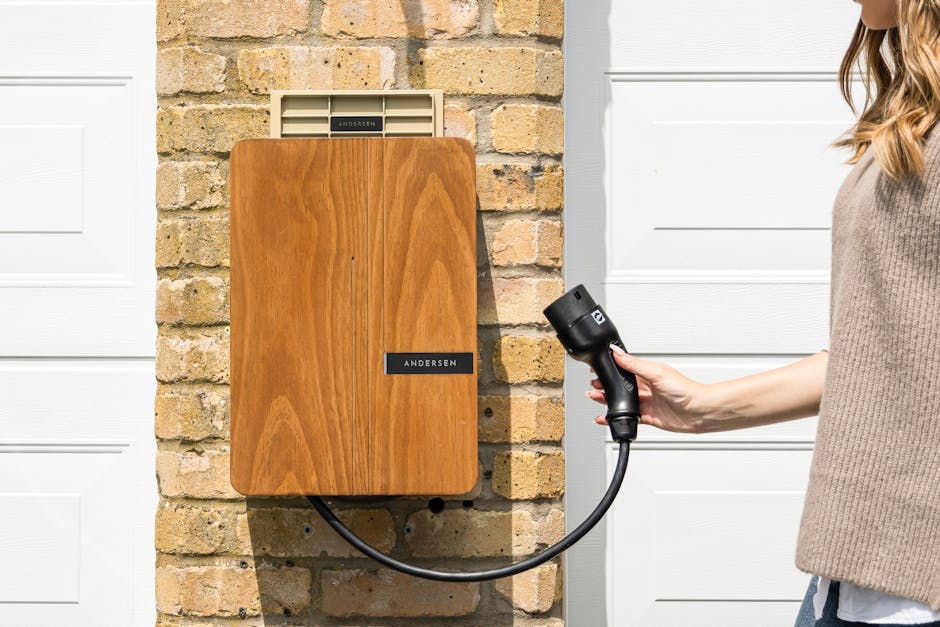
Andersen is the design-first, longest-warranty option in the UK consumer market. Both the A3 (single-phase 7kW only) and the Quartz (single-phase 7kW or three-phase 22kW) feature hidden charging cable storage inside the body of the unit — the cable retracts when not in use rather than dangling on a hook. Both also carry a 7-year warranty, the longest of any consumer EV charger sold in the UK as of mid-2026 (Andersen EV).
Native Intelligent Octopus Go support arrived for both A3 and Quartz in 2026 (Octopus Energy) — a meaningful gap-closer, since earlier Andersen units couldn't be controlled by IOG. Quartz is offered in 11 finish colours; A3 ships with 13 metal finishes as standard plus optional wood-effect upgrades.
What to know before buying: Andersen sits at the top of the price ladder — A3 from £995 unit-only, Quartz from £1,195, with installed packages from £1,374 via Smart Home Charge or £1,430 direct from Andersen. That's roughly double a Pod Point Solo 3S installed. The A3 is single-phase only — buy the Quartz if you have or plan to install three-phase. A user-reported issue worth knowing: removing the charger from the Octopus app for routine troubleshooting can leave it in a state where it reports as 'incompatible' when re-adding, requiring escalation to Octopus support to resolve. This is integration-fragility on Octopus's side, not the Andersen hardware, but it affects all IOG-linked chargers.
Andersen A3 / Quartz — key specs
| Specification | Value |
|---|---|
| Power output | A3: 7kW single-phase only · Quartz: 7kW single-phase or 22kW three-phase |
| Cable | Hidden tethered cable storage (both models) |
| Smart-tariff integration | Native Intelligent Octopus Go (added 2026) |
| Solar mode | Yes via CT clamp |
| Connectivity | Wi-Fi |
| Finishes | A3: 13 metal · Quartz: 11 colours |
| Warranty | 7 years (longest in UK consumer market) |
| Typical installed price (May 2026) | A3 from ~£1,374 · Quartz from ~£1,089 |
Hypervolt Home 3 Pro — best mid-range all-rounder
Three solar modes, native IOG, polished UK-developed app
The Hypervolt Home 3 Pro is the strongest mid-priced choice if you want a well-built unit with native Octopus Intelligent Go integration and serious solar capability — without paying Andersen money. It's a 7.4kW single-phase 32A unit available tethered (5m or 7.5m Type 2) or untethered (Best Chargers, 2026), with the LED ring on the front face that marks every Hypervolt out at a glance.
The differentiator is the three solar modes — Solar, Hybrid, and Boost — accessed via a CT clamp. Solar charges only from PV surplus (similar to Zappi ECO+), Hybrid blends grid and solar at a configurable ratio, and Boost overrides for a fixed top-up. Native integration covers both Intelligent Octopus Go and OVO Charge Anytime. The 2026 app refresh added Hypervolt Connect for household sharing (multiple drivers, one charger) and improved energy monitoring.
What to know before buying: warranty is 3 years standard, extendable to 5 — better than Ohme but still short of Andersen. Pricing starts around £749 for the unit, with typical UK installed quotes in the £900–£1,100 range as of May 2026. The Home 3 Pro is the best balance of capability and cost in this guide — pick it unless you specifically need Andersen's warranty or Zappi's solar pedigree.
Hypervolt Home 3 Pro — key specs
| Specification | Value |
|---|---|
| Power output | 7.4kW (single-phase 32A) |
| Cable | Tethered 5m / 7.5m or untethered |
| Smart-tariff integration | Native Intelligent Octopus Go + OVO Charge Anytime |
| Solar mode | Three modes (Solar / Hybrid / Boost) via CT clamp |
| Connectivity | Wi-Fi |
| Warranty | 3 years (extendable to 5) |
| Typical installed price (May 2026) | £900–£1,100 |
Easee One — best lightweight / multi-EV household
1.5 kg, open-PEN built-in, balances 3 units on one fuse
The Easee One is the smallest and lightest charger in this guide by a wide margin. At 256 × 193 × 106 mm and just 1.5 kg, it is roughly the size and weight of a hardback novel (Easee). The other notable engineering choice is integrated open-PEN protection — the safety circuit that detects loss of the protective earth/neutral conductor on a UK supply. Most other chargers in this guide either rely on a separate earth rod or implement open-PEN through a more elaborate sensing network; Easee builds it into the unit.
The standout feature for two-EV households is load balancing across up to three Easee units on a single fuse, coordinated wirelessly. Two cars sharing one 60A consumer-unit feed can both charge overnight without tripping the supply, and a third unit can be added later without re-running cable. The unit ships with a built-in 4G eSIM (LTE CAT M1) — no monthly subscription — plus optional Wi-Fi.
What to know before buying: the Easee One is socketed only (you supply your own Type 2 cable), though the app-controlled cable lock effectively converts it to a tethered charger when the cable is plugged in. UK installed pricing sits in the £918–£999 range as of May 2026. The Easee was suspended from sale in the UK in 2023 over an open-PEN safety review — current units have been re-certified, but it's worth checking your installer is using the post-recertification model. Native Intelligent Octopus Go support is currently not on Octopus's published compatibility list (Octopus Energy) — Easee runs its own scheduling layer instead.
Easee One — key specs
| Specification | Value |
|---|---|
| Power output | 7.4kW (single-phase) |
| Cable | Untethered (BYO Type 2 cable, app-locked when plugged in) |
| Smart-tariff integration | Easee scheduling app (no native Intelligent Octopus Go) |
| Solar mode | Yes via accessory |
| Connectivity | 4G eSIM (no subscription) + Wi-Fi + Bluetooth |
| Load balancing | Up to 3 units on one fuse, wirelessly coordinated |
| Weight | 1.5 kg |
| Warranty | 3 years |
| Typical installed price (May 2026) | £918–£999 |
Pod Point Solo 3S — best simple + reliable
UK-established install network, OZEV-compliant out of the box
The Pod Point Solo 3S is the conservative pick — a 7kW unit from a UK installer network that has been operating since 2009. Native Intelligent Octopus Go support arrived in 2026, alongside the existing integrations with Pod Point's own Charge app for time-of-use scheduling. It is also OZEV-grant eligible out of the box, which matters for renters and flat-owners claiming the £500 chargepoint grant introduced on 1 April 2026 (GOV.UK).
Tethered (Type 2 cable, 4.8m) and untethered variants are sold; the Solo 3S keeps a clean white plastic enclosure with a small LED row showing charge state. There's no front display, no app-mode toggling — operation is intentionally minimal. Pod Point was acquired by EDF in 2020 and rebranded as 'Pod' under the broader Pod Energy umbrella in 2024, but the Solo 3S name and the installer-network footprint remain unchanged.
What to know before buying: typical UK installed pricing is £999 for the untethered Universal and £1,049 for the tethered version (TeslaCharger.co.uk, 2026). Solar mode is supported but the implementation is simpler than Zappi's or Hypervolt's — single threshold, no hybrid blending. Buy this if you want a no-fuss install from a known UK installer with predictable warranty handling, and you don't need solar diversion finesse or Andersen-level aesthetics.
Pod Point Solo 3S — key specs
| Specification | Value |
|---|---|
| Power output | 7kW (single-phase) |
| Cable | Tethered 4.8m or untethered |
| Smart-tariff integration | Native Intelligent Octopus Go (added 2026) + Pod Point Charge app |
| Solar mode | Yes (single-threshold) |
| Connectivity | Wi-Fi |
| Warranty | 3 years |
| Typical installed price (May 2026) | £999 untethered · £1,049 tethered |
Wallbox Pulsar Plus — competent hardware, no native Octopus
Avoid in 2026 unless you're not on a UK smart EV tariff
The Wallbox Pulsar Plus is the smallest 'real' charger here after the Easee — a single-phase unit adjustable up to 9.6kW (40A) with Wi-Fi and Bluetooth (Wallbox). It supports dynamic load balancing between home and charger, has a 3-year warranty, and the myWallbox app is well-rated for monitoring and scheduling. The Pulsar Plus is also the only charger in this guide with three-phase variants in international markets (UK retail is single-phase only).
The reason it does not rank higher: Wallbox is not on Octopus's Intelligent Octopus Go compatibility list as of May 2026 (Octopus Energy). For households on the UK's most popular smart EV tariff, that's a meaningful capability gap. Wallbox's own myWallbox scheduler can be set to charge during the IOG 23:30–05:30 window manually, but you forfeit the dynamic cheap-slot extensions Octopus dispatches outside that window.
What to know before buying: Pulsar Plus has no built-in cellular, so a Wi-Fi outage stops scheduling. Solar diversion requires the separate Wallbox Power Boost accessory. Typical UK installed pricing is £700–£900. Pick the Pulsar Plus only if you're staying on a flat-rate tariff or a non-Octopus smart tariff (E.ON Next Drive Smart, EDF GoElectric) — on Intelligent Octopus Go, every other charger in this guide is a stronger choice.
Wallbox Pulsar Plus — key specs
| Specification | Value |
|---|---|
| Power output | Adjustable up to 9.6kW (40A) — UK retail typically 7.4kW |
| Cable | Tethered Type 2 |
| Smart-tariff integration | myWallbox scheduling — NO native Intelligent Octopus Go |
| Solar mode | Yes via separate Power Boost accessory |
| Connectivity | Wi-Fi + Bluetooth (no cellular) |
| Warranty | 3 years |
| Typical installed price (May 2026) | £700–£900 |
Decision matrix — match the charger to your priority
Answer one question first
The seven chargers above all do the basic job (charge an EV at 7kW from a UK home) — the differentiation lives in the second-order priorities. Use the four mini-recipes below to short-circuit the choice.
Three things that changed in 2026
What to know before you buy
1. The chargepoint grant rose to £500 per socket on 1 April 2026. The OZEV grant for renters, landlords, flat owners, on-street parking households, and businesses increased from £350 to £500 per socket, alongside the Workplace Charging Scheme rising to £500/socket and a new £2,000/socket grant for state-funded education institutions. Five schemes are extended through 31 March 2027 (GOV.UK, 2026). Standard homeowners with off-street parking remain ineligible — they have been since the original Electric Vehicle Homecharge Scheme closed in 2022. Read the full details in our EV chargepoint grant 2026 guide.
2. Intelligent Octopus Go added a 6-hour Charge Cap in March 2026. Octopus pre-announced the cap in December 2025 (Octopus Energy) — managed charging on IOG is now limited to 6 hours of cheap-rate per 24 hours, with anything beyond that billed at the day rate. The fair-use cap was always in clause 2.4.1.8 of the IOG terms; March 2026 is when it began being enforced. About 80% of IOG charging sessions already complete in under 6 hours, so most households are unaffected, but high-mileage drivers and households with larger battery packs (Tesla Model X / Lucid Air) should plan around it. The cap matters specifically when picking between Ohme (which lets you toggle the dispatcher between hitting the SOC target and capping at 6 hours) and chargers that always defer to whatever Octopus dispatches.
3. Octopus raised IOG off-peak rates again on 1 May 2026. After the headline-grabbing 1 April 2026 cut to regional rates as low as 3.49p/kWh, Octopus issued a less-than-two-weeks-notice email on 20 April announcing a price rise effective 1 May, citing global energy volatility tied to the Middle East conflict (MoneySavingExpert, 2026). Standing charges also rose by an average ~52p/month. The April low-water mark is no longer current — verify the regional rate against Octopus's tariff card before committing to a charger primarily for its IOG integration.
Things to consider before pressing buy
Six checks that prevent expensive surprises
Single-phase vs three-phase supply. Roughly 90% of UK homes are single-phase — capped at 7.4kW charging speed regardless of which charger you fit. If your house is one of the 10% with three-phase electricity (often modern detached homes built post-2010), the Andersen Quartz, Zappi v2.1 (22kW variant), or Pulsar Plus three-phase can deliver up to 22kW. Most EVs cannot accept 22kW AC anyway — check your car's onboard AC charger rating before paying for three-phase capability you cannot use.
Tethered vs untethered. Tethered (cable permanently attached) is faster to use day-to-day — plug in, walk away. Untethered (you supply the cable) is more flexible if you have multiple cars with different connector orientations and slightly cheaper at the unit level. Untethered also de-risks cable damage — replace one cable, not the whole charger.
[DNO notification](/blog/dno-notification-g98-g99-ev-charger/). All charger installs above 3.6kW require your Distribution Network Operator to be notified — sometimes within 28 days of install, sometimes pre-approval depending on local supply capacity. The installer handles this, but if you live in an older house with a low main-fuse rating (60A or below), you may need a fuse upgrade first. Get the installer's DNO notification status confirmed in writing.
OCPP support. The Open Charge Point Protocol matters mainly if you want to use third-party energy-management software (Home Assistant, Loxone) or if you might switch energy suppliers in future and want the new supplier's smart-tariff integration. Andersen, Easee, and Wallbox all support OCPP. Ohme and Pod Point use proprietary protocols — you're locked into the manufacturer's app + the supplier integrations they have struck.
Smart-tariff lock-in. Native Intelligent Octopus Go integration works best when Octopus is your supplier. If you switch to E.ON Next Drive Smart or EDF GoElectric, you will use the charger's own scheduler instead — so picking Ohme purely for its Octopus integration depth makes less sense if you're tariff-shopping every year.
Warranty + manufacturer survival. A 7-year warranty is only worth what the manufacturer's balance sheet can pay out. Andersen, Pod Point (now Pod under EDF), and myenergi are well-capitalised UK businesses. Hypervolt is a smaller UK player with strong product but a shorter trading history. If you are buying a charger you intend to own for 8+ years, manufacturer financial stability deserves at least as much weight as warranty length.
Frequently asked questions
Quick answers to the seven most common buyer questions
What is the best home EV charger UK in 2026 overall?
Do I need a 22kW three-phase charger?
Which chargers work with Intelligent Octopus Go?
Can I claim the £500 chargepoint grant on any home charger?
Should I choose tethered or untethered?
Do I need a separate earth rod for my EV charger install?
Can two EVs share one home charger?
Pair the right charger with the right tariff
Once you've picked a charger, the next decision is which UK EV tariff to put behind it. Our independent ranking compares Intelligent Octopus Go, EDF GoElectric, OVO Charge Anytime, E.ON Next Drive Smart and four others on rate, off-peak window, and eligibility — with a decision matrix keyed to your annual mileage.