Affiliate Disclosure
We may earn a commission when you buy through links on our site, at no extra cost to you. This helps us keep the site running and allows us to continue providing free, high-quality content. Our editorial opinions are our own and are not influenced by compensation.
Hypervolt Home 3 Pro Review 2026: Driver Power #1 Charger
Hypervolt Home 3 Pro: Driver Power 2024 #1, dual solar modes, native Octopus Intelligent Go + OVO Charge Anytime. From £1,099 fitted via OVO.
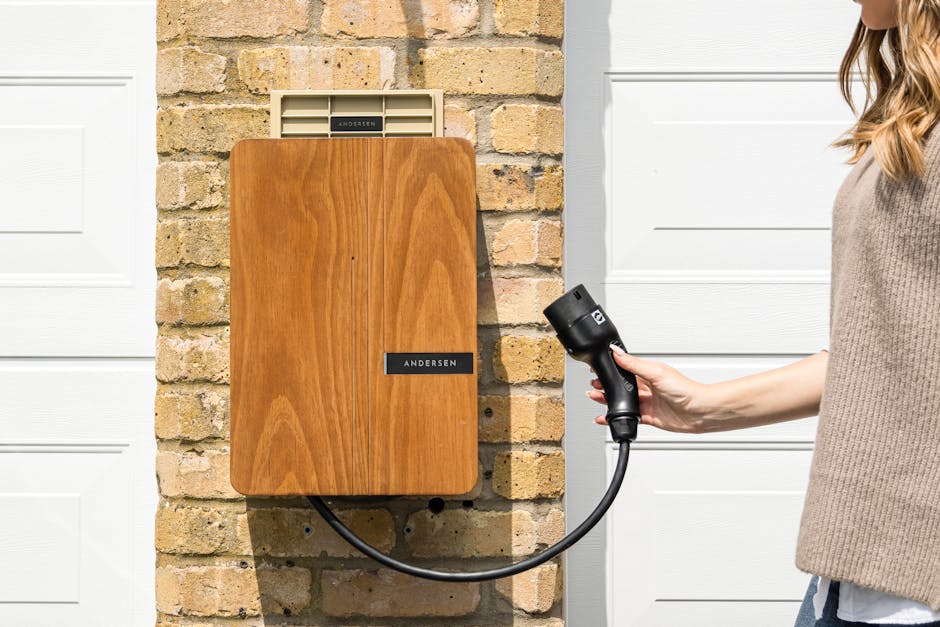
If you're shopping for a premium home EV charger in the UK in 2026, the Hypervolt Home 3 Pro is the unit you have to justify not buying. It ranked first overall in Auto Express's 2024 Driver Power survey of more than 50,000 owners, ahead of Easee and [Zappi](/review/myenergi-zappi-v2-review/), and won five of the seven assessed categories outright. It is also one of the very few UK chargers with first-class native integration into both Octopus Intelligent Go and OVO Charge Anytime — most rivals privilege one ecosystem or the other. The price you pay for that breadth is a unit that costs noticeably more than an Ohme Home Pro fitted, and a build-quality category result that's worth understanding before you commit.
Hardware and design
The Home 3 Pro is a single-phase 7.4 kW (32A) [tethered](/blog/tethered-vs-untethered-ev-charger/) wallbox measuring 328 × 243 × 101 mm. The casing is a clean, slab-fronted design with a discreet Hypervolt brand mark and an LED light pipe that dims and changes colour based on charge state. It comes in Space Grey, Ultra Black, and Ultra White finishes — a small detail, but the white version uses a UV-resistant outer shell that's specifically designed not to yellow under prolonged sunlight (an issue widely reported on the older Home 2 generation).
Cable options are 5 metres standard, with 7.5 m and 10 m upgrades available; the 10 m option is Type 2 only. Type 1 (SAE J1772) tethered is offered for older Japanese imports and certain pre-2018 EVs, but the vast majority of UK buyers will take the Type 2 variant. Dimensions are nearly identical to the older Home 3 — the Pro's differences are mostly internal hardware: the cable now exits from the back rather than the bottom, the outer casing is removable and swappable for re-finishing, and the UV protection is improved.
The IP66 ingress rating and IK10 impact rating are strong on paper — IP66 means dust-tight and protected against powerful water jets, IK10 means the casing should resist a 20 J impact. In practical terms that's a unit rated for an unsheltered driveway wall, exposed to direct rain and incidental knocks. It is worth noting, though, that Driver Power's owner survey ranks Hypervolt only seventh of eight brands surveyed for build quality — Easee leads that category. The paper figures and the lived experience clearly diverge somewhere; we'd interpret that as a signal to be careful with the install (sealed cable glands, plumb mounting, sheltered placement where possible) rather than a sign the figures are wrong.
Connectivity is Wi-Fi 802.11 b/g/n on 2.4 GHz plus Bluetooth Low Energy 4.2 for setup. There's no 4G fallback — the unit relies on a working home Wi-Fi connection for tariff-aware scheduling, which is something to factor in if your driveway is at the far end of the property from the router.
Tariff integration — the dual-ecosystem trick
The Home 3 Pro's defining commercial argument is that it's one of very few UK home chargers with native first-class integration into both Octopus Intelligent Go and OVO Charge Anytime. Most chargers force a choice.
For Octopus Intelligent Go, the integration is now in general availability after entering open beta in September 2024. Setup happens inside the Octopus Energy app — the Devices tab, Add Device, Electric Vehicle, Hypervolt — and Octopus runs a test charge to confirm pairing. From that point onwards, IOG smart-charging schedules dispatch through the Hypervolt automatically. The mechanism is OCPP-based rather than the deeper direct-API path that Ohme uses, which means Hypervolt customers do not get the bonus off-peak slots that Ohme's direct integration unlocks. For most households the standard 11:30pm–5:30am IOG window is more than enough; if you're regularly charging large packs that would benefit from extra cheap-rate hours, that's a meaningful Ohme advantage.
For OVO Charge Anytime, the Home 3 Pro is now fully compatible after the trial completed. Existing Charge Anytime customers can pair the Hypervolt directly through the OVO app and get the same flat off-peak rate that drove the original tariff. There is no equivalent native Charge Anytime support on the Ohme Home Pro — OVO retired that integration in August 2025, leaving Charge Anytime customers to use OVO's vehicle-telemetry app instead. If you're an OVO customer and want a charger-side rather than car-side smart-charging integration, the Hypervolt is the obvious pick.
The 2026 app refresh adds an optional overlay called Powerverse Raya — an AI scheduling layer from Hypervolt's parent company. Raya layers on top of (rather than replacing) tariff integration, taking household consumption patterns and solar surplus data and refining the schedule the underlying tariff hands down. It's most useful for solar households on variable tariffs; for fixed-rate IOG users with no PV, it adds little.
Solar integration — and why the included CT clamp matters
If you have a solar PV array, the Home 3 Pro is one of the most capable mass-market wallboxes you can buy. The CT clamp ships in the box; it fits at the consumer unit and gives the charger live visibility of grid import and solar export. Two solar charge modes are then available: Eco (Solar & Grid), which charges from solar surplus first and tops up from the grid if surplus is insufficient, and Super Eco (Solar Only), which charges only when surplus exceeds the minimum threshold and pauses otherwise.
The Super Eco mode is the meaningful one for households serious about charging on green electrons only. It's directly comparable to Zappi's ECO+ mode — the original solar-diversion charger, and still arguably the gold standard. The Hypervolt's advantage is that the CT clamp is already included rather than being an add-on, and the solar logic is integrated into the same app as tariff scheduling. Zappi forces you into the myenergi app for solar logic and an OCPP bridge for Octopus tariff integration; the Hypervolt keeps both in one place.
For pure tariff users with no PV, the included CT clamp still earns its keep — it acts as the dynamic load-balancing sensor, throttling the charger when the rest of the house is drawing heavily. That matters most on older properties with a 60A or 80A main fuse where running a 7 kW charger flat-out alongside an electric oven and shower would otherwise trip the cut-out.
Where it falls short
Three weaknesses are worth flagging.
Build quality, per owners. The Driver Power 2024 survey ranked Hypervolt seventh of eight brands for build quality — well behind Easee, which leads the category. The IP66 and IK10 paper figures are strong, so the gap is unlikely to be about catastrophic failures; it's more likely about minor finish, fit, and longevity issues that a 50,000-respondent survey picks up but a one-off lab test misses. That argues for paying attention to install quality (a competent OZEV-authorised installer matters here more than on, say, an Ohme) and choosing a sheltered mount where practical.
Driver Power respondents also ranked Hypervolt seventh of eight for ease of use, with EO leading the category. The discrepancy with Hypervolt's first-place finish for app design and customer service is interesting — it suggests the problem is in the initial setup or first-time pairing rather than day-to-day operation. Worth budgeting an evening for setup rather than expecting a 15-minute first-charge experience.
Total cost of ownership. Hardware-only is £690, which compares well with Easee and Wallbox. But once you add a fitted install — typically through OVO's bundle from £1,099 (5 m cable) — the price floor lands above the Ohme Home Pro's £999 fitted equivalent. For households not already on OVO and uninterested in switching, third-party installers charge £950–£1,200 fitted depending on cable run and main-fuse work. The Hypervolt is consistently £100–£200 more than the Ohme on a like-for-like basis.
Warranty positioning. Three years standard is fine but unremarkable. Extending to five years is a paid add-on at install time. Easee and the original Zappi v2 both ship three years standard too, so this isn't an outlier — but it's not a competitive advantage either.
How it compares
Three direct rivals are worth considering at this price point.
The Ohme Home Pro is the better pick if you're absolutely committed to Intelligent Octopus Go and want the deepest integration available. Its direct-API path unlocks bonus off-peak slots that the Hypervolt's OCPP integration can't see. It's also £100–£200 cheaper fitted. The trade-offs are no native solar diversion (a deal-breaker if you have PV) and a plain industrial design that doesn't approach the Hypervolt's finish.
The myenergi Zappi v2 is the original solar-diversion specialist and still arguably the most sophisticated PV-side logic on the UK market. If you already have an Eddi diverter or harvi current sensor, the Zappi extends naturally into that ecosystem. Tariff integration is weaker than the Hypervolt's — Zappi schedules through the myenergi app rather than directly inside Octopus or OVO.
The Easee One is the build-quality leader per Driver Power respondents and the most straightforward charger to install (the casing comes apart for the electrician's work in a way no other unit on this list does). It loses on smart-tariff polish — Easee's app is more functional than designed — and it has an unusual UK history around historic safety reviews that's worth being informed about, though the One has shipped in compliant form for years now.
For the broader picture, our best home EV charger UK 2026 ranks seven UK chargers head-to-head with current pricing, and our best EV tariffs UK 2026 covers the tariff side of the choice.
Who should buy the Hypervolt Home 3 Pro
Buy if: you want Driver Power's #1 charger overall, you have solar PV and need genuine surplus-only charging out of the box, you want native support for both Octopus Intelligent Go and OVO Charge Anytime under one wallbox, or visual design weight in your buying decision.
Look at the Ohme Home Pro instead if: you're tariff-locked to Intelligent Octopus Go, you don't have solar PV, and you want the deepest direct-API tariff integration on the UK market for £100–£200 less fitted.
Look at the Zappi v2 instead if: you have an existing myenergi system, or you want the most sophisticated solar-diversion logic on the UK market and don't mind weaker direct-tariff integration.
Look at the Easee One instead if: build quality is your top priority and the smart-charging app polish is secondary.
Specifications
| Specification | Value |
|---|---|
| Power output | 7.4 kW (32A, single-phase) |
| Connector | Type 2 (IEC 62196) or Type 1 (SAE J1772) tethered |
| Cable lengths | 5m, 7.5m, 10m (10m only in Type 2) |
| Colours | Space Grey, Ultra Black, Ultra White (UV-protected) |
| Dimensions | 328 (H) x 243 (W) x 101 (D) mm |
| IP rating | IP66 — fully exposed outdoor rated |
| Impact rating | IK10 |
| Connectivity | Wi-Fi 802.11 b/g/n (2.4 GHz) + Bluetooth LE 4.2 |
| Load balancing | Automatic load management; CT clamp included |
| Solar modes | Eco (Solar & Grid), Super Eco (Solar Only) |
| Tariff integrations | Native Octopus Intelligent Go, OVO Charge Anytime |
| Smart charging | SCPR-compliant; off-peak default + randomised delay |
| Warranty | 3 years (5 years optional extra) |
| Country of origin | UK (designed and built) |
| Price (hardware-only) | £690 (5m, white) |
| Price (OVO bundle, fitted) | From £1,099 (5m), £1,149 (7.5m), £1,199 (10m) |
Frequently asked questions
Does the Hypervolt Home 3 Pro support Intelligent Octopus Go?
Does it support OVO Charge Anytime?
Does it support solar charging?
How much does the Hypervolt Home 3 Pro cost installed?
Is there a 22kW three-phase variant?
What's the warranty period?
Is the Home 3 Pro compliant with the UK Smart Charge Point Regulations?
What is Powerverse Raya, and do I need it?
Check current pricing on the Hypervolt Home 3 Pro
OVO Energy bundles the Hypervolt Home 3 Pro from £1,099 fitted (5m cable). Available to OVO and non-OVO customers — Charge Anytime requires an OVO energy plan.
Pros & Cons
Pros
- Auto Express Driver Power 2024 ranked Hypervolt #1 of 8 UK home charger brands, ahead of Easee and Zappi
- Native Octopus Intelligent Go integration enabled directly inside the Octopus app since 2024 GA
- OVO Charge Anytime support is now in general availability (post-trial), making this rare dual-tariff coverage
- CT clamp ships included — Eco (Solar & Grid) and Super Eco (Solar Only) modes work out of the box
- IP66 ingress and IK10 impact ratings — rated for fully exposed outdoor wall installation
- Three cable lengths (5m, 7.5m, 10m) and three colour finishes (Space Grey, Ultra Black, Ultra White)
- Designed and built in the UK with optional Powerverse Raya AI scheduling overlay added in the 2026 app refresh
Cons
- Driver Power respondents ranked Hypervolt only 7th of 8 brands for build quality — Easee leads that category
- Driver Power also ranks Hypervolt 7th for ease of use; EO leads, suggesting the polish hides setup friction
- Hardware-only price (£690) excludes installation; the OVO bundle starts at £1,099 fitted but is 'standard install' only
- OVO Charge Anytime requires switching energy supplier to OVO — a meaningful commitment if you're committed to a non-OVO tariff
- 22 kW variant requires three-phase supply; DNO upgrade typically £3,000-£15,000
- Standard warranty is 3 years; extending to 5 years is a paid add-on
Our Verdict
The Hypervolt Home 3 Pro is the strongest premium home charger on the UK market in 2026 — it tops the Auto Express Driver Power survey, supports both Octopus Intelligent Go and OVO Charge Anytime natively, and is one of the few units that ships with a CT clamp included for genuine solar diversion out of the box. The build-quality category Driver Power respondents flagged is the only material caveat. Score 4.4/5 — the right pick for design-led buyers who want every major UK tariff option and a serious solar story.