Affiliate Disclosure
We may earn a commission when you buy through links on our site, at no extra cost to you. This helps us keep the site running and allows us to continue providing free, high-quality content. Our editorial opinions are our own and are not influenced by compensation.
Ohme Home Pro Review 2026: Deep Octopus Integration
Ohme Home Pro on Intelligent Octopus Go: deepest direct-API tariff integration of any UK home charger, sub-£1,000 fitted, but no solar diversion in 2026.
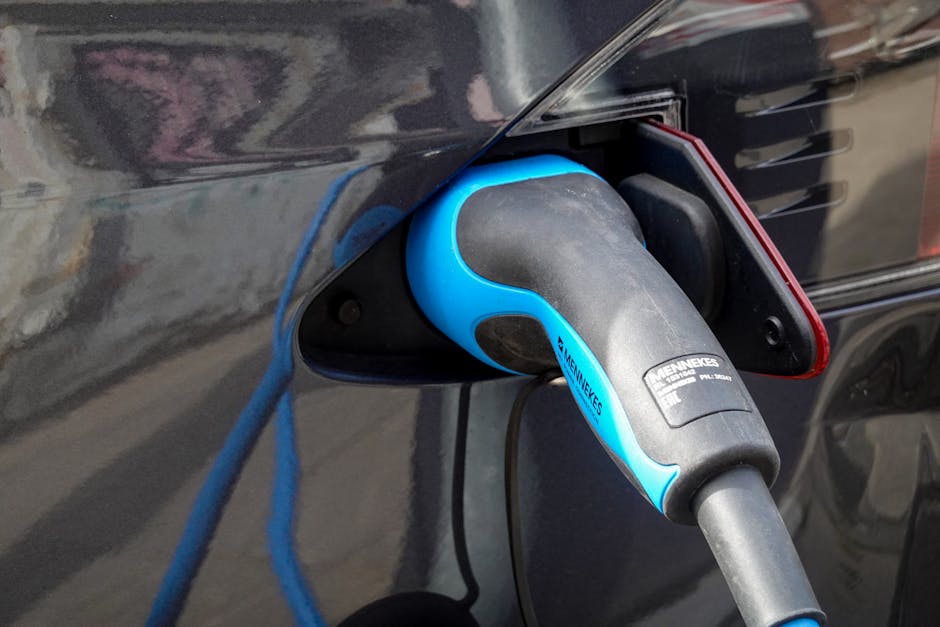
If you're shopping for a home EV charger in the UK in 2026 and you're either on Intelligent Octopus Go or planning to switch to it, the Ohme Home Pro is the default pick. It has the deepest direct-API integration with Octopus tariffs of any home charger on the UK market, a sub-£1,000 entry price including standard installation, and a small but useful colour LCD that means the charger remains operable when the app inevitably stops cooperating. The flip side: no native solar diversion, a plain design, and a few rough edges in the IOG experience that recur across community discussion.
Hardware and design
The Home Pro is a [tethered](/blog/tethered-vs-untethered-ev-charger/) 7.4 kW (32A, single-phase) Type 2 charger measuring 170 (H) × 200 (W) × 100 (D) mm — at the slimmer end of the home-charger market. Build is solid plastic with no flex or creak in the casing. It carries an IP55 ingress rating, which is sufficient for an unsheltered exterior wall in UK weather provided the install is plumb and the cable gland is sealed correctly.
The headline addition over Ohme's previous-generation units is a 3-inch colour LCD on the front face. The screen surfaces the live charging session, the next scheduled slot, the connected tariff and a Max Charge override. In practice the on-charger controls are most useful for two things: confirming a charge actually started when the Ohme app is being slow to refresh, and triggering an override charge without having to find a phone. It's a small upgrade but a meaningful one in households where multiple people use the unit.
The 5-metre tethered cable is standard; an 8-metre upgrade is offered (typically around £95 extra at the manufacturer's online store) and is worth specifying upfront if the parking spot sits more than 4 metres from the proposed mount. There's no untethered variant — Ohme's ePod range covers that use case.
One genuinely useful install detail: the unit ships with a built-in O-PEN fault device, which removes the need for an installer to drive a separate earth rod into the ground at most properties. The supplied CT clamp handles dynamic load balancing — fitted around the property's main tail, it lets the charger throttle delivery automatically when the rest of the house is drawing heavily, which is particularly relevant on older 60A or 80A main fuses. The data sheet documents both as standard inclusions.
The Octopus story — the actual reason to buy this charger
The Home Pro's strongest argument over rivals is its direct API integration with Octopus Energy. According to Octopus's own integration documentation, when a Home Pro is paired to an Intelligent Octopus Go account the tariff is set up automatically in the Ohme app, Dynamic Charging is enabled, and the Price Cap setting is removed. From that point onwards the Ohme charger receives slot allocations from Octopus directly and dispatches the EV against them — a deeper handshake than the OCPP-based integrations that competitors fall back on.
The practical payoff is access to bonus off-peak slots outside the standard 11:30pm–5:30am IOG window. According to Ohme's own support documentation, IOG members who pair via Ohme can get the 7p-ish off-peak rate during additional cheaper slots that Octopus offers as grid conditions allow. Standard Octopus Go on a non-API charger doesn't get those bonus slots — you only get the fixed window.
The Home Pro also supports Octopus Go, Agile, and Cosy via the same integration path, per Smart Home Charge's review summary. Households on Agile in particular benefit from the half-hourly rate-card import, since Ohme schedules against the cheapest published slots rather than against a fixed timer.
One important configuration detail: connecting both the charger and the car simultaneously to IOG creates conflicting schedules and causes failed sessions. Ohme's support page is explicit on this point — pair one device, not both. For most households the charger is the right pick, since it stays paired across car changes; for households with multiple EVs sharing one charger, the alternative is to pair each car directly and leave the Ohme in dumb-pass-through mode.
Where it falls short
Three weaknesses recur often enough to flag.
No solar diversion. The Home Pro has no surplus-PV mode. For a household with a 4kWp+ array, this is a meaningful gap — you cannot tell the charger to dispatch only when solar surplus exceeds X kilowatts. Top Charger's review notes the limitation explicitly. The myenergi Zappi v2 and Hypervolt with myenergi integration both deliver solar-only modes natively. If solar is part of your buying brief, the Home Pro is the wrong unit.
Cost-display reliability on IOG. A recurring concern across community discussion is that the in-session cost shown in the Ohme app does not match the billed rate on Intelligent Octopus Go. The mechanism is well-understood: the Home Pro reports its allocated slots to Octopus, and the actual rate applied to those slots is calculated by Octopus, not by the charger. The figure that's right is the one that appears in the Octopus app billing summary the day after — not the one the Ohme app shows during the session. It's not a billing error, but it is a UX pothole that confuses new IOG joiners every month.
Vehicle-API integration is uneven by make. The Home Pro pulls live state of charge from a long list of supported vehicles (BMW, Hyundai, Jaguar, Kia, Nissan, Renault, Tesla, and most VW Group cars), but the integration is intermittent on some models — VW MEB-platform cars including the ID.7 attract the most reports of failed pairings. The Volkswagen Group expansion announced on 30 April 2026 introduces a new dedicated API designed to fix this, and pairing reliability for VW, Audi, Skoda, SEAT, Cupra and VW Commercial vehicles is expected to improve as that rolls out across Europe. When the API path fails, the Ohme falls back to time-and-percentage scheduling — usable, but you lose live-SoC display in the app.
How it compares
The two natural alternatives at the same price point are the [Hypervolt Home 3 Pro](/review/hypervolt-home-3-pro-review/) and the myenergi Zappi v2.
The Hypervolt is the better-looking unit and tops the Driver Power EV charger satisfaction survey at the time of writing. Its OCPP-based integration with Octopus works, but it doesn't get the bonus IOG slots that direct-API integration unlocks. For households that prioritise design and don't care about an extra few off-peak slots a month, Hypervolt is the right pick.
The Zappi v2 is the solar-PV pick. Its ECO+ mode dispatches only when solar surplus exceeds the diversion threshold; FAST mode delivers a fixed kW like any normal charger. If you have an existing myenergi system (Eddi diverter, harvi current sensor) the Zappi extends naturally. The trade-off is weaker tariff integration than the Ohme — Zappi schedules via the myenergi app, not via Octopus directly.
For the broader picture, our best home EV charger UK 2026 ranks seven UK chargers head-to-head with current pricing.
Who should buy the Ohme Home Pro
Buy if: you're an Octopus customer (or planning to switch), you don't have a solar PV array, your driveway parking is within 5–8 metres of the proposed mount, and you want the deepest tariff integration on the UK market for a sub-£1,000 fitted price.
Look at the Hypervolt Home 3 Pro instead if: visual design matters to you and you don't mind giving up the IOG bonus slots; or if you're not on Octopus and the OCPP path is sufficient.
Look at the Zappi v2 instead if: you have solar PV and want surplus-only or surplus-prioritised charging; or you're already in the myenergi ecosystem.
Skip entirely if: you're an OVO customer relying on Charge Anytime — that integration was retired on 31 August 2025 per Ohme's support communication, and OVO customers must use OVO's own app via direct vehicle telemetry instead.
Specifications
| Specification | Value |
|---|---|
| Power output | 7.4 kW (32A, single-phase) |
| Connector | Type 2 tethered |
| Cable length | 5m standard, 8m optional |
| Display | 3-inch colour LCD with on-charger controls |
| Connectivity | 4G + Wi-Fi for over-the-air updates |
| IP rating | IP55 |
| Earthing | Built-in O-PEN fault device |
| Load balancing | CT clamp included |
| Solar diversion | Not supported |
| Dimensions | 170 (H) x 200 (W) x 100 (D) mm |
| Warranty | 3 years |
| Price (fitted) | From £999 inc. standard installation |
Frequently asked questions
Is the Ohme Home Pro compatible with Intelligent Octopus Go?
Does the Ohme Home Pro support solar diversion?
What happened to OVO Charge Anytime support?
How much does the Ohme Home Pro cost installed?
Does the Home Pro work without an internet connection?
What's the warranty period?
Check current pricing on the Ohme Home Pro
Smart Home Charge typically lists the Home Pro from £999 fitted. Pricing varies by installer and any required main-fuse upgrade.
Pros & Cons
Pros
- Direct-API integration with Octopus tariffs unlocks bonus off-peak slots outside the standard 11:30pm-5:30am window
- On-charger 3-inch LCD lets you start, stop and adjust without opening the app
- Sub-£1,000 entry price including standard installation and a 3-year warranty
- Built-in O-PEN fault device removes the need for an external earth rod at most installs
- 5m cable as standard, 8m option for awkward driveway runs
- CT clamp included for dynamic load balancing on properties with limited main fuse headroom
Cons
- No native solar diversion — wrong choice for households with PV who want surplus-only charging
- OVO Charge Anytime integration was withdrawn in August 2025; OVO customers must use OVO's own app via vehicle telemetry
- Vehicle-API integration is intermittent on some VW MEB models; ID.7 owners commonly fall back to time/percentage scheduling
- In-session cost displayed by the Ohme app does not match billed cost on Intelligent Octopus Go until Octopus reconciles slot data after unplug
- Plain industrial design compared with rivals like the Hypervolt Home 3 Pro
Our Verdict
The Ohme Home Pro is the default smart charger for any UK household on Intelligent Octopus Go or other Octopus tariffs — its direct-API integration unlocks bonus off-peak slots that competitors only get via OCPP fallback, and the colour LCD plus on-charger controls are genuinely useful when the app is glitching. It loses points for missing solar diversion (a bigger deal for PV households than most reviewers admit), the in-session cost figure being unreliable on IOG, and a plain industrial design. Score 4.2/5 — the right pick for the largest segment of UK EV buyers, the wrong pick if you have solar or want OVO Charge Anytime.