OVO Charge Anytime (2026): 14p PAYG or £27.50 Plans?
OVO Charge Anytime in 2026: 14p/kWh PAYG vs four monthly plans (£27.50-£79.50) - which fits your mileage and home-charging mix.
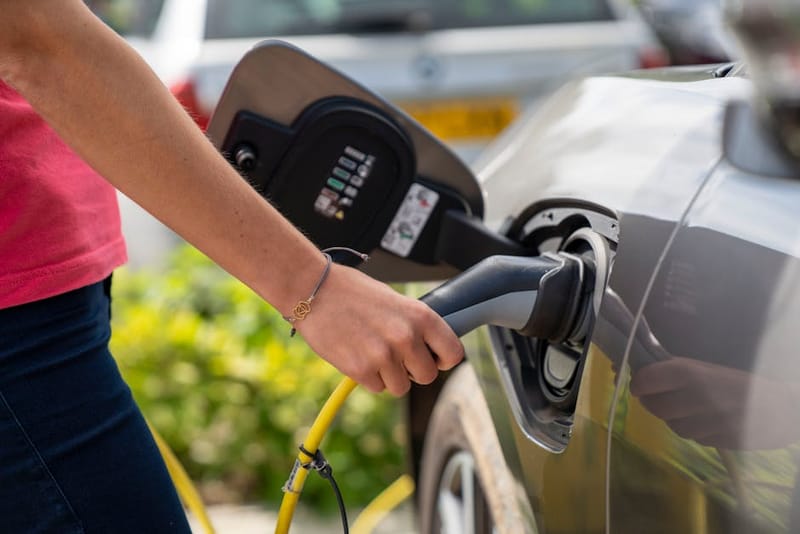
OVO's Charge Anytime is the UK's only major EV charging product structured as an add-on you bolt onto an existing OVO energy account. There are now two distinct ways to use it: pay-as-you-go at 14p/kWh (a flat off-peak rate that applies whenever you smart-charge), or one of four monthly plans (£27.50, £37.50, £59.50, £79.50) that bundle a fixed allocation of home-charging miles plus a public-charging voucher. This guide explains how each route works, what's actually cheaper, and which households should pick which.
How Charge Anytime Actually Works
Unlike Intelligent Octopus Go or EDF GoElectric - both of which are full electricity tariffs that replace your standard tariff - Charge Anytime is an add-on. You stay on whatever OVO base tariff you'd normally have (Simpler Energy, Simpler 3-Year Fixed, or one of OVO's other base products), and Charge Anytime rebates the cost of EV charging electricity to a flat off-peak rate.
The mechanism is dataset-based. OVO's app talks to your compatible EV or charger, identifies the kWh used during charging sessions, and credits your bill so the effective rate for those kWh is the Charge Anytime rate (14p PAYG, or whatever the monthly-plan effective rate works out to). The rest of your home electricity stays on the base tariff's day rate.
Practical implications:
- Whole-home off-peak rate doesn't apply. Unlike IOG which gives you the off-peak rate for everything between 23:30–05:30, Charge Anytime only discounts the EV-charging kWh. Your dishwasher, dryer, and heat pump on a schedule do not benefit.
- You can charge any time, day or night. Charge Anytime's algorithm picks low-grid-impact slots dynamically; you don't have to remember to plug in before midnight. The trade-off is less predictable session timing - typical scheduled sessions land between roughly 23:00–07:00, with occasional daytime bonus slots when the grid has surplus.
- Switching costs are low. Adding or removing Charge Anytime is in-app and takes effect within a billing cycle. No early-exit fees, no tariff lock-in beyond your base tariff's normal terms.
PAYG: 14p/kWh Flat
The pay-as-you-go option is the simplest: every kWh OVO identifies as EV charging is billed at 14p/kWh, regardless of when it's used. As of November 2025 OVO confirmed the rate at 14p/kWh, equating to roughly 3.5p per mile at a 4 mi/kWh efficiency. There's no monthly fee, no minimum mileage commitment, and no setup cost beyond the standard add-on activation.
The 14p figure is meaningfully higher than Intelligent Octopus Go's roughly 8p/kWh off-peak rate (regional, varies by postcode) - but Charge Anytime PAYG offers no monthly commitment and runs for households where IOG's 6-hour overnight cap doesn't suit. For drivers covering 4,000–7,000 miles/year (~1,000–1,750 kWh of EV charging), the PAYG annual cost lands at £140–£245. That's higher than IOG's £80–£140 in the same range, but the convenience of no scheduling and no minimum commitment is real for some households.
The Four Monthly Plans
The 2026 plan structure replaced earlier per-month bands. There are now four tiers, each bundling a fixed allocation of home-charging miles plus a public-charging voucher:
| Standard | Premium | Standard Plus | Premium Plus | |
|---|---|---|---|---|
| Home miles included | 700 miles/month | 1,000 miles/month | 1,400 miles/month | 2,000 miles/month |
| Public charging voucher | £120 (across the year) | £120 (across the year) | £240 (across the year) | £240 (across the year) |
| EV Charger Cover | Included | Included | Included | Included |
| Battery health test | Not included | Included (valued at £558) | Not included | Included |
| KwikFit discount | Not included | 15% off tyres | Not included | 15% off tyres |
| Best for | Households doing 7,000–10,000 miles/year with occasional public charging. | Higher-mileage drivers (~12,000 mi/year) who value the battery report at MOT/sale time. | Multi-EV households or commuters covering 16,000+ mi/year, with regular public-charging needs. | High-mileage drivers (24,000+ mi/year) - taxi/sales/delivery - who want max bundled mileage and Premium extras. |
PAYG vs Plans: When the Maths Flips
The headline cost-per-mile comparison looks unfavourable for the plans on the home-charging side alone. PAYG is roughly 3.5p/mile (14p/kWh ÷ 4 mi/kWh). The Standard plan at £27.50 ÷ 700 mi = 3.93p/mile - slightly worse. Premium at £37.50 ÷ 1,000 mi = 3.75p/mile, marginally worse. Without the public voucher, every plan is more expensive per home mile than PAYG.
The plans only make sense once you account for the public-charging voucher. £120/year at typical UK public-rapid prices (around 60–80p/kWh for an InstaVolt or BP pulse) covers roughly 1,500–2,000 miles of public-charging spend. £240/year covers double that. If you'll actually use the voucher - i.e. you regularly need to charge in public - the effective cost-per-mile drops materially.
Rough break-even maths (assumes the voucher gets fully used):
- Under 7,000 home miles/year and rarely charge in public: PAYG wins. Plans cost more than the same miles on PAYG and the voucher value goes unspent.
- 8,000–10,000 home miles/year + occasional public charging: Standard plan is at parity or slightly cheaper than PAYG once the voucher is factored in. Choose Standard if the voucher value will be used; PAYG if not.
- 10,000–14,000 home miles/year + regular public charging: Premium becomes attractive - the higher home-mile allowance plus the £120 voucher justifies the £37.50/month outlay if mileage is consistent.
- 14,000+ miles/year + heavy public-charging dependence: Standard Plus or Premium Plus depending on how much you value the Premium extras (battery health test + tyre discount).
The trap is overpaying for a higher-tier plan and not using the bundled miles. If your monthly home-charging usage drops to 400 miles for two months running (holidays, illness, working from home), you've paid £27.50–£79.50 for usage you didn't take. The PAYG fallback exists for a reason.
What 'EV Charger Cover' Actually Covers
EV Charger Cover is bundled into every Charge Anytime plan (PAYG and all four monthly tiers). It's a maintenance product covering breakdown of your home charger - typically inverter failure, cable damage, control-board issues. OVO sends a contractor at no additional cost; if the unit can't be repaired economically, replacement is offered.
The exclusions are the usual suspects: pre-existing faults, damage from non-OVO-installed units in some cases, and consumables like cable jackets degraded by UV. For households with chargers more than 3 years old, this is meaningful - a 5-year-old wallbox failing out of warranty could otherwise cost £400–£900 to replace, and the cover effectively pays for itself if you use it once.
This is the most under-marketed value in Charge Anytime. Households on a third-party charger out of manufacturer warranty effectively get an extended service plan for free as long as they're on Charge Anytime, even on PAYG.
Eligibility and Setup
Confirm OVO base tariff
Charge Anytime is an add-on, not a standalone tariff. You need an existing OVO base electricity contract. Switching to OVO from another supplier takes the standard ~14 days; Charge Anytime can then be added in-app once the supply transfer completes.
Confirm SMETS2 (or supported SMETS1) smart meter
Charge Anytime needs half-hourly meter readings. SMETS2 universally works; certain Secure-manufactured SMETS1 meters that OVO has retro-certified also qualify. Older non-smart meters need replacement first - OVO arranges this free of charge but it adds 4–8 weeks to onboarding.
Check EV / charger compatibility
OVO publishes a compatibility list for both EVs and home chargers. The list overlaps significantly with the IOG list but is not identical - some chargers compatible with one are not compatible with the other. Confirm yours appears on OVO's specific list before signing up.
Add Charge Anytime in the OVO app
Once base tariff is live and meter is communicating, the add-on is enabled in-app. Pick PAYG or one of the four monthly plans during activation; switching between PAYG and a plan, or between plans, is also done in-app and goes live the following billing cycle.
Link the EV or charger
Final step is OAuth-linking your manufacturer account (BMW ID, Tesla, We Connect ID, etc.) or your charger account (Ohme, Hypervolt, etc.). This is what enables OVO to identify EV-charging kWh and apply the correct rate.
Where Charge Anytime Falls Short
Three issues recur often enough to flag.
The 14p PAYG rate is materially higher than IOG. For households purely optimising for the cheapest possible per-kWh, IOG at ~8p typically wins by a wide margin if your charger or EV is on its compatibility list. Charge Anytime makes more sense for OVO loyalists, multi-EV households where IOG's 6-hour cap bites, or buyers who value the no-scheduling convenience.
The monthly-plan economics depend on actual public-charging usage. If the £120 / £240 public-charging voucher goes unused (because you rarely leave home or have charge-at-work access), the plans become noticeably worse than PAYG. Track your public charging across a sample month before committing to a plan tier.
The add-on architecture means you're tied to OVO's base tariff. If OVO's base tariff is uncompetitive in your region (and base tariffs vary regionally), the headline Charge Anytime saving can be eroded by overpaying on the day rate for the rest of your home consumption. Compare full-electricity-cost-over-12-months against alternatives, not just the EV portion.
Frequently Asked Questions
Does Charge Anytime require a smart charger?
Can I switch between PAYG and a monthly plan later?
What happens if I exceed my monthly plan's mile allowance?
Does the public-charging voucher work on any network?
How does Charge Anytime compare to Intelligent Octopus Go?
What's the catch with the EV Charger Cover?
Bottom Line
Charge Anytime is best understood as a tariff for OVO loyalists who want EV-rate charging without the lock-ins of a full smart EV tariff. PAYG at 14p suits low-mileage households and anyone who wants the simplest possible setup. The four monthly plans only earn their keep when the public-charging voucher gets used in full - track your public-rapid usage for a representative month before committing to a tier.
If you're not already on OVO and you're flexibility-shopping the EV tariff space, Intelligent Octopus Go generally wins on raw cost per kWh provided your charger is compatible. If you're an OVO customer and want the simplest no-switch route to off-peak EV rates, Charge Anytime PAYG is the right starting point - upgrade to a plan only when your actual usage data justifies it. Our EV tariff comparison ranks every option on cost per mile, and our cost-to-charge guide works through the maths in detail.
Compare every UK EV tariff
OVO Charge Anytime, Intelligent Octopus Go, EDF GoElectric, British Gas EV Power and the rest - ranked by effective cost per mile.