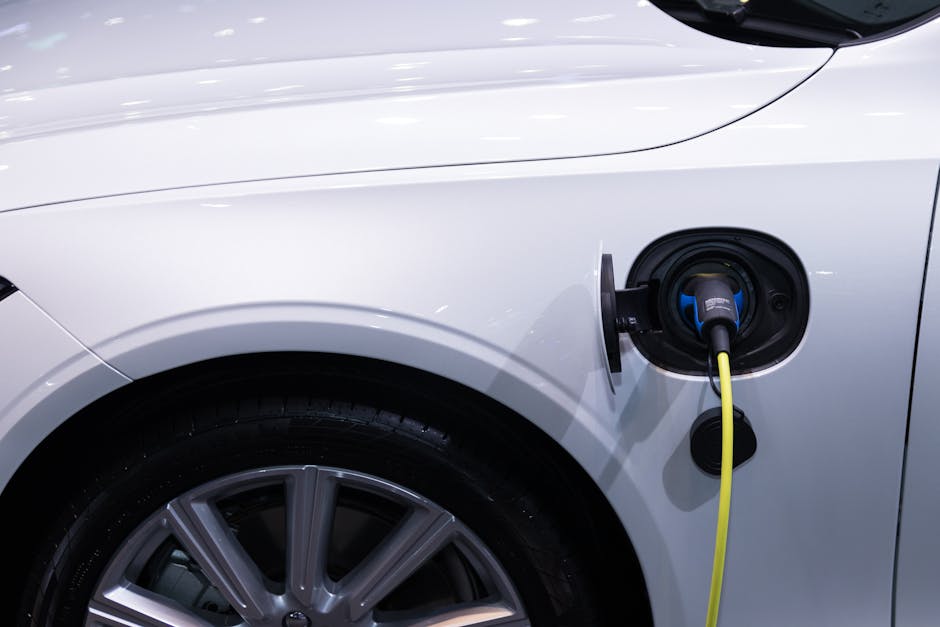
Intelligent Octopus Go Compatible Cars and Chargers (2026)
Which cars and chargers actually work with Intelligent Octopus Go in 2026 — the brands that talk to the Octopus app, and the ones that don't.
If you want the Intelligent Octopus Go off-peak rate, the first thing to check isn't your tariff — it's whether you have an Intelligent Octopus Go compatible car or charger. The tariff only works when Octopus can talk to one or the other through an API. This guide covers which makes and models are supported as of 2026, which chargers are on the integration list, and what to do if your car isn't recognised.
How Intelligent Octopus Go Decides What to Charge
Intelligent Octopus Go is a smart EV tariff. The headline benefit is a flat off-peak rate of around 8p/kWh applied to your whole home during a guaranteed [six-hour overnight window](/blog/intelligent-octopus-go-six-hour-charge-cap/) (typically 23:30–05:30), plus extra bonus cheap slots when the grid has surplus renewable capacity. Octopus publishes the headline rate on its tariff page; rates vary slightly by region.
The catch: to deliver those bonus slots, Octopus needs an API connection to either your car or your charger so it can start, stop, and shift your charging session in real time. That API connection is what people mean when they ask whether a vehicle or charger is “IOG compatible”.
There are two routes:
- Car-side integration: Octopus talks directly to your car's manufacturer API (Tesla's API, Volkswagen Group's We Charge / We Connect ID, BMW's ConnectedDrive, Renault's MyR-Link). The car decides when to draw power, regardless of which charger you have. This is the simpler route for most drivers — any reasonably modern home charger will do as long as it doesn't fight the car.
- Charger-side integration: Octopus talks to your smart charger's cloud API (Ohme, Hypervolt, Indra, Zappi, Andersen, VCHRGD). The charger pulls the schedule from Octopus and modulates the supply. This route works with any car the charger supports — useful if your EV brand has no direct integration.
One of those two paths must exist for the tariff to work properly. If neither does, you'll just be on a flat 8p/kWh between 23:30 and 05:30 with no smart shifting — which still beats a single-rate tariff for most EV drivers, but you lose the bonus-slot upside.
Compatible Cars: Brands with Direct API Integration
Octopus claims integration with over 280 vehicle / charger combinations. The car-side compatibility list (where Octopus talks directly to the manufacturer's API and you don't strictly need a smart charger) is narrower — and it changes as carmakers update their connected-vehicle services. As of 2026, the brands with confirmed direct integration are:
Model 3, Model Y, Model S, Model X — any Tesla with smart charge scheduling enabled. The strongest direct integration; many Tesla owners run IOG with no smart charger at all.
Via the Audi connect plus / e-tron Charging Service API. Sub-set of the Volkswagen Group integration.
ID.3, ID.4, ID.5, ID.7, ID. Buzz — via We Connect ID. The integration is the same Volkswagen Group stack used by Audi, Porsche, and SEAT/Cupra electric models.
Via Porsche Connect, sharing the Volkswagen Group API surface.
Via BMW ConnectedDrive. Mini Cooper E and Countryman SE Electric also work because they share the BMW backend.
Via the Renault MyR-Link API — a relatively recent addition.
Compatible Chargers
A compatible charger is the more reliable path — it works for any car the charger physically supports, and it doesn't depend on the manufacturer keeping its connected-vehicle API up to date. The current 2026 IOG-compatible charger list includes:
| Feature | Best Overall Ohme Home Pro / ePod ★★★★★ 4.5 | Hypervolt Home 3 Pro ★★★★☆ 4.4 | myenergi Zappi v2.1 (or Zappi V1) ★★★★☆ 4.3 | Andersen A3 / Quartz ★★★★☆ 4.2 | Best Value Indra Smart Pro / Smart Lux ★★★★☆ 4 | VCHRGD Seven / Seven Pro ★★★★☆ 3.8 |
|---|---|---|---|---|---|---|
| Price | $999.00 | $1099.00 | $899.00 | $1295.00 | $549.00 | $749.00 |
| Rating | 4.5/5 | 4.4/5 | 4.3/5 | 4.2/5 | 4/5 | 3.8/5 |
| Integration depth | Native — the deepest IOG integration. Octopus controls the schedule directly through Ohme's cloud. | Cloud-API integration — works reliably with IOG. | API integration via myenergi cloud. | Recent IOG addition (2025). | API integration via Indra cloud. Includes vehicle-to-load (V2L) support on Smart Pro. | API integration. Newer entrant on the IOG list. |
| Solar diversion | ✗ | Yes (firmware 3.3+) | Yes (the original UK solar-diversion charger) | Yes (with Konnect+) | ✓ | Pro only |
| Best for | Drivers who want the simplest possible IOG setup. Recommended by Octopus. | Solar PV households who also want IOG flexibility. | Solar-heavy homes that don't want to give up self-consumption logic. | Buyers prioritising design — Andersen units hide the cable internally. | Budget-conscious drivers and households exploring V2L. | Drivers who want a UK-designed alternative without the Ohme price. |
If Your Car Isn't on the Compatibility List
The car-side list is short. Most UK EV drivers — Hyundai, Kia, Peugeot, Vauxhall, MG, Polestar, BYD — will need to take the charger-side route. The good news: any of the chargers above will run IOG with any of those cars. Octopus simply schedules the charger, the charger gates the supply, and the car charges whenever the charger feeds it electrons.
The practical difference between the two paths is small. The charger-side route requires the charger's cloud to receive the schedule and translate it into a contactor signal, which adds a step. In bonus-slot situations — where the grid suddenly has surplus renewable capacity and Octopus wants to fire a 30-minute cheap window with limited notice — that extra step matters slightly more. For the guaranteed 23:30–05:30 window, the two paths are functionally identical.
How Sign-up Actually Works
Check your postcode
Octopus's IOG page lets you enter a UK postcode to confirm regional availability. Northern Ireland and a handful of remote postcodes are still excluded from smart tariffs in 2026.
Confirm vehicle / charger compatibility
The signup flow asks for your EV make and model, then your charger make and model. Either combination must produce a green tick. If neither does, you'll be offered IOG without smart slots (still the off-peak rate, just without the dynamic bonus charging).
Confirm smart-meter requirement
You need a SMETS2 smart meter (or a SMETS1 in DCC mode) capable of half-hourly billing. Octopus will arrange a smart-meter install if you don't have one yet, but the IOG sign-up itself can't complete until the meter is operating in smart mode.
Switch — or upgrade if you're already with Octopus
Existing Octopus customers can request the tariff move in-app and it goes live within 1–2 billing cycles. New customers complete a normal switch; the IOG selection happens during onboarding.
Link the car or charger
Once IOG is live on your account, you'll be prompted to link your manufacturer account (BMW ID, Tesla, We Connect ID, etc.) or your charger account (Ohme, Hypervolt, etc.) inside the Octopus app. This is what flips on the bonus-slot scheduling.
Frequently Asked Questions
Can I run Intelligent Octopus Go without a smart charger?
What's the difference between Octopus Go and Intelligent Octopus Go?
Why aren't Hyundai and Kia compatible?
Does the 8p rate apply to my dishwasher and tumble dryer too?
What happens if Octopus drops support for my car?
Is the rate really 8p/kWh in 2026?
Bottom Line
If you've already chosen your car, your IOG eligibility is largely fixed — but the charger you pair it with isn't. For Hyundai, Kia, Peugeot and the long tail of EVs without direct integration, an Ohme Home Pro is the safest IOG bet. For Tesla owners, you can run IOG on almost any reasonable home charger (or none at all). For everyone else, check the live compatibility checker on Octopus's site before committing — and if you're still picking a charger, our best home EV charger comparison ranks every model on the list above.
Ready to switch to Intelligent Octopus Go?
Octopus's signup flow checks your postcode, car, and charger before quoting — takes about 3 minutes.