Intelligent Octopus Go vs OVO Charge Anytime 2026
Comparing Intelligent Octopus Go vs OVO Charge Anytime
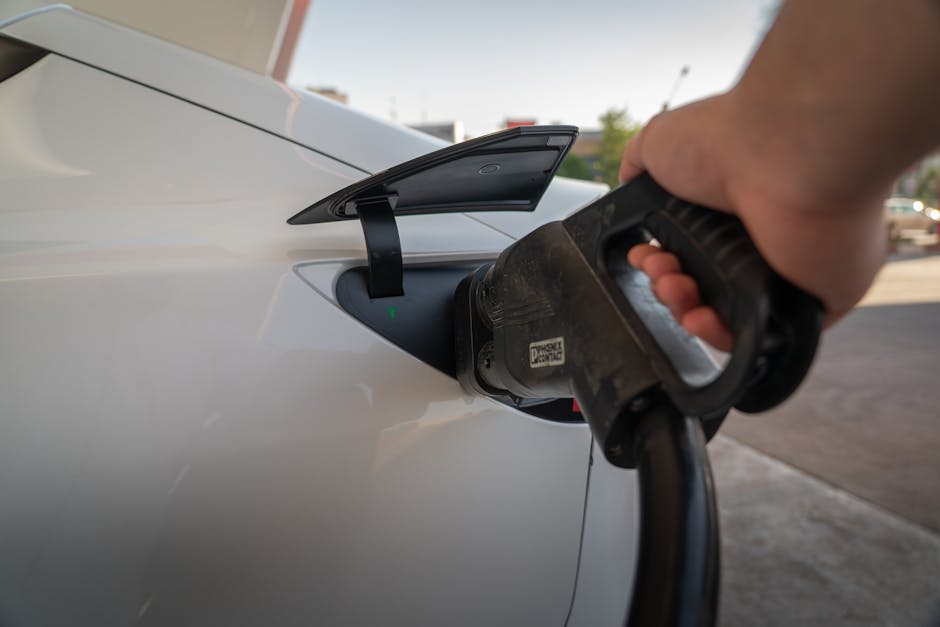
Intelligent Octopus Go and OVO Charge Anytime were the two best-known UK EV tariffs at the start of 2025. By April 2026 the gap between them had widened sharply: a doubling of the OVO PAYG rate in November 2025, a 39% cut on Intelligent Octopus Go in April 2026, and a new 6-hour daily cap on Octopus's tariff that quietly reshaped its value proposition. This comparison sets the two products against the figures published on each supplier's tariff card and the Ofgem cap as of May 2026, then offers a decision matrix keyed to monthly mileage, smart-charger ownership, and whether you have solar.
Quick Comparison
| Feature | Best Overall Intelligent Octopus Go ★★★★★ 4.5 | OVO Charge Anytime ★★★★☆ 3.5 |
|---|---|---|
| Price | — | — |
| Rating | 4.5/5 | 3.5/5 |
| Best For | The default pick for the typical UK EV household — significantly cheapest on the rate card, with whole-home off-peak as a bonus. | Worth considering only if you can't fit a charge into a fixed overnight window or you do enough public-charge mileage to use the £120–£240 voucher. |
Detailed Breakdown
1. Intelligent Octopus Go
Pros
- ✓ 5.49p/kWh off-peak from 1 April 2026 — a 39% cut on the previous 9p rate
- ✓ Cheap rate applies whole-home for the 6-hour window, not just to the EV
- ✓ Compatible with Ohme, Andersen, Wallbox, Hypervolt, Zappi and Octopus Charge
- ✓ Pairs with Outgoing Octopus for solar export — best fit for solar households
Cons
- ✗ From March 2026 only the first 6 hours per 24h get the off-peak rate; further charging falls back to the higher Boost rate
- ✗ Requires switching to Octopus Energy as your supplier and an SMETS2-compatible smart meter
2. OVO Charge Anytime
Pros
- ✓ Smart-schedules charging at any time of day — useful for shift workers and households who can't always charge overnight
- ✓ Monthly plans bundle £120–£240/year of public-charging credit and EV charger cover
- ✓ No long-term contract — switch plans or cancel any time
Cons
- ✗ PAYG rate doubled from 7p to 14p/kWh on 4 November 2025 — now ~2.5× IOG's post-April 2026 rate
- ✗ Discount applies to the EV charging session only, not the whole home — non-EV electricity stays on the standard unit rate
- ✗ Monthly-plan overage reverts to standard home unit rates (typically 25–35p/kWh), not the 14p PAYG rate
- ✗ No integrated solar or battery support
Our Verdict
How the rate cards compare in 2026
The headline rate gap is the easiest place to start. Intelligent Octopus Go dropped to 5.49p/kWh on 1 April 2026 (a 39% cut from the previous 9p rate, driven by the November 2025 Budget removing approximately £150 of green levies from electricity bills). OVO Charge Anytime's pay-as-you-go option moved the other way on 4 November 2025: the previous 7p/kWh flat rate doubled to 14p/kWh, alongside the launch of four monthly add-on plans.
That puts the two PAYG rates ~2.5× apart — but the comparison is more nuanced than the headline gap suggests. Three structural differences matter as much as the unit rate:
Whole-home vs EV-only. Intelligent Octopus Go's 5.49p rate applies to everything drawn between 23:30 and 05:30 — heating, hot water, dishwasher, phone chargers, anything on the meter. Charge Anytime's 14p rate applies only to the EV charging session itself; the rest of your household electricity stays on OVO's standard unit rate at all hours. A typical UK home with a heat pump and an electric hot-water cylinder can easily shift another 100–200kWh/month into the cheap window, which Intelligent Octopus Go monetises and Charge Anytime doesn't.
Fixed window vs smart-scheduled any-time. Intelligent Octopus Go runs on a 23:30–05:30 nightly window. Charge Anytime has no fixed window — you tell OVO when the car needs to be ready by, and OVO's scheduler picks the greenest available half-hours within that deadline. For households where overnight charging works, the fixed window is fine. For drivers on rotating shifts, parents who plug in at school-run time, or households with two EVs sharing one charger, Charge Anytime's flexibility is a real, distinct value — even at 14p/kWh.
The 6-hour cap. From March 2026, Intelligent Octopus Go limits the off-peak rate to the first six hours of charging per 24-hour period (measured midday-to-midday). Charging beyond that falls to the customer's daytime Boost rate, which sits around 32p/kWh. Octopus's own data shows roughly 80% of nightly sessions already fit inside six hours, but very high-mileage drivers or households charging multiple EVs on one connector can hit the cap regularly.
When OVO's monthly plans actually compete
OVO's four [monthly plans](/blog/ovo-charge-anytime-monthly-plans/) (Standard at £27.50, Premium at £37.50, Standard Plus at £59.50, Premium Plus at £79.50) bundle a kWh allowance, a public-charging voucher, and EV charger cover. On a pure home-charging cost-per-kWh basis they look poor: £27.50 for 175 kWh works out at 15.7p/kWh, and the higher tiers run 15–17p/kWh. That's worse than the 14p PAYG rate before any other factor.
The monthly plans only start to make sense when two specific conditions hold:
You actually use most of the bundled allowance. A driver who consistently uses 175 kWh at home each month gets full value from Standard's 700-mile allowance. A driver who only uses 100 kWh a month is paying for 75 kWh they didn't need, which raises the effective per-kWh cost to ~27p. The plans are strict caps too: home-charging consumption above the allowance reverts to your standard home unit rate (typically 25–35p/kWh for OVO's variable tariffs), not back to the 14p PAYG rate.
You use the public-charging voucher. The £120/year voucher (£240 on the Plus tiers) buys ~200–500 kWh of public DC charging at typical 50–70p/kWh rates. That's meaningful — at £240/year, the voucher alone is worth £20/month, which essentially halves the headline plan cost for drivers doing 1,000+ public miles a year. Drivers who never use the public network are leaving most of that value on the table.
Even after both factors apply, Intelligent Octopus Go is normally still cheaper for the household electricity portion. The Charge Anytime monthly plans are best understood not as competing on price but as a packaged convenience product — predictable monthly cost, public-charging built in, EV charger insurance bundled — for drivers who would otherwise be on Charge Anytime PAYG.
Decision matrix
Use the three inputs that matter most: monthly home charging in kWh, whether you have a charger from Octopus's compatibility list, and how much mileage you do on the public network.
| Profile | Compatible smart charger? | Public mileage? | Best fit |
|---|---|---|---|
| Typical commuter, 6,000–12,000 mi/yr, charges overnight | Yes | Low (under 1,000 mi/yr) | Intelligent Octopus Go — cheapest by a wide margin, 6h cap is non-binding at this mileage |
| Same as above | No (charger not on Octopus list) | Low | Standard Octopus Go or EDF GoElectric — Charge Anytime PAYG is still the worst option at this mileage |
| High-mileage driver, 15,000+ mi/yr, mostly overnight | Yes | Low to moderate | Intelligent Octopus Go with Charge Cap off — accept some kWh land at the Boost rate, the rest is still 5.49p |
| Long-distance driver, 20,000+ mi/yr, 30%+ on public network | Either | High | OVO Charge Anytime Standard Plus or Premium Plus — £240 voucher does real work at this public-network volume |
| Shift worker / can't reliably charge overnight | Either | Any | OVO Charge Anytime PAYG or Standard plan — flexible scheduling beats the IOG fixed window |
| Solar PV household | Yes | Any | Intelligent Octopus Go + Outgoing Octopus — only Octopus pairs solar export with EV-tariff scheduling natively |
| Already on OVO, low switching appetite | Either | Moderate to high | Stay on Charge Anytime at the appropriate plan tier — the Octopus saving (~£15/month at typical mileage) may not justify supplier-switching friction |
Two practical notes on this matrix. First, Intelligent Octopus Go requires switching to Octopus Energy as your supplier — that's a 4–6 week process and worth weighing against the saving over a 12-month horizon. Second, the headline rate-card numbers move with each Ofgem cap window (1 April, 1 July, 1 October, 1 January). The 5.49p figure here is correct for the April–June 2026 cap; check the live Octopus tariff card before signing up.
Eligibility and switching mechanics
Both tariffs require an SMETS2 smart meter (or a compatible SMETS1 unit) sending half-hourly meter reads. If you don't already have one, the install adds 6–12 weeks to either switch and is free.
Intelligent Octopus Go additionally requires being a current Octopus Energy customer and owning a vehicle or smart charger on Octopus's compatibility list. As of May 2026 that list includes Tesla (direct API integration), Ohme Pro and ePod, Andersen EV, Octopus Charge, plus OCPP-compatible support for Wallbox, Hypervolt and Zappi. Customers without a supported charger fall back to standard Octopus Go, which has a shorter five-hour off-peak window and a slightly higher rate.
OVO Charge Anytime requires an active OVO Energy account and a compatible EV or smart home charger — OVO's compatibility list is broader than Octopus's because Charge Anytime uses OCPP rather than per-charger API integrations. Existing OVO customers can add Charge Anytime as an add-on without switching their underlying tariff. Non-OVO customers need to switch supplier to OVO first.
Neither tariff has an exit fee on its variable-rate version. Octopus's variable Intelligent Octopus Go and OVO's PAYG and monthly Charge Anytime plans can all be left or changed at any time. Some Octopus fixed-term variants (12-month locked rate products) carry exit fees — check the specific product page in your account before signing up to a fix.
What to watch for in the rest of 2026
Three things on the EV-tariff radar for the next six months matter more than the IOG vs Charge Anytime question itself.
First, the July 2026 Ofgem cap sets the next rate-card movement. The April cut was driven by the November 2025 Budget removing £150 of green levies; the July cap is unlikely to move levies again, but wholesale prices are the larger swing factor. Both Octopus and OVO publish updated tariff cards 4–6 weeks ahead of cap day.
Second, EDF's GoElectric tariff at 6.99p/kWh on a 7-hour window launched alongside the April 2026 reshuffle. It undercuts Intelligent Octopus Go on rate slightly and offers the longest off-peak window of any UK EV tariff — a meaningful advantage for drivers regularly charging more than 50 kWh in a single overnight session. EDF doesn't have whole-home off-peak in the same form, so the IOG vs EDF comparison turns on how much non-EV consumption you can shift into the cheap window. Our best EV tariffs UK 2026 ranking covers the full eight-tariff field.
Third, the vehicle-to-grid (V2G) export market is starting to reach UK households on tariffs that pair with solar export. Octopus has a head start with Outgoing Octopus and the V2G pilot programme; OVO's V2G product remains in trial. Solar households planning to add V2G in 2026–2027 have a structural reason to prefer Octopus today.
Frequently asked questions
What is the cheapest EV tariff in the UK in 2026?
Why did OVO Charge Anytime double its PAYG rate in November 2025?
Can I switch from OVO to Octopus to get Intelligent Octopus Go?
Does the IOG 6-hour Charge Cap apply to all charging or just the EV?
Does OVO Charge Anytime work with solar panels or home batteries?
What happens if I exceed my OVO Charge Anytime monthly mileage allowance?
Switch to Intelligent Octopus Go
Octopus's eligibility checker confirms whether your smart meter, EV and home charger combination is supported, and your final regional rate is confirmed in your account once switching completes.